
Silverfish and Larder Beetles: The Mid-Winter Interior Threat

Commercial Safeguards: Managing Silverfish and Larder Beetles in Hudson Valley Facilities
For commercial property managers and business owners in the Hudson Valley, winter is often synonymous with snow removal and heating costs. However, as the temperature in Poughkeepsie and Newburgh drops to an average of 25°F in January, a different kind of operational risk emerges. While the bustling traffic on I-87 and Route 9W continues, silent invaders like Silverfish and Larder Beetles are actively seeking refuge within the climate-controlled envelopes of your warehouses, retail spaces, and professional offices.
At Hollenbeck Pest Control, we understand that for a business, a pest sighting is more than a nuisance—it is a threat to inventory, structural integrity, and brand reputation. By employing Integrated Pest Management (IPM), we provide the sophisticated level of protection required by modern commercial standards in Orange County, Rockland County, and Ulster County.
The Biology of the Winter Breach
In the Hudson Valley, the "indoor season" for pests is driven by the extreme temperature differential between the frozen outdoors and the 68°F–72°F environments we maintain for our staff and customers.
Commercial Silverfish and Larder Beetle infestations in New York are most common in winter due to heated indoor microclimates. Silverfish destroy high-starch materials like paper and textiles, while Larder Beetles contaminate high-protein food sources. Effective management requires a professional Integrated Pest Management (IPM) approach to identify entry points and disrupt breeding cycles without halting business operations.
Why Hudson Valley Businesses Are at Risk
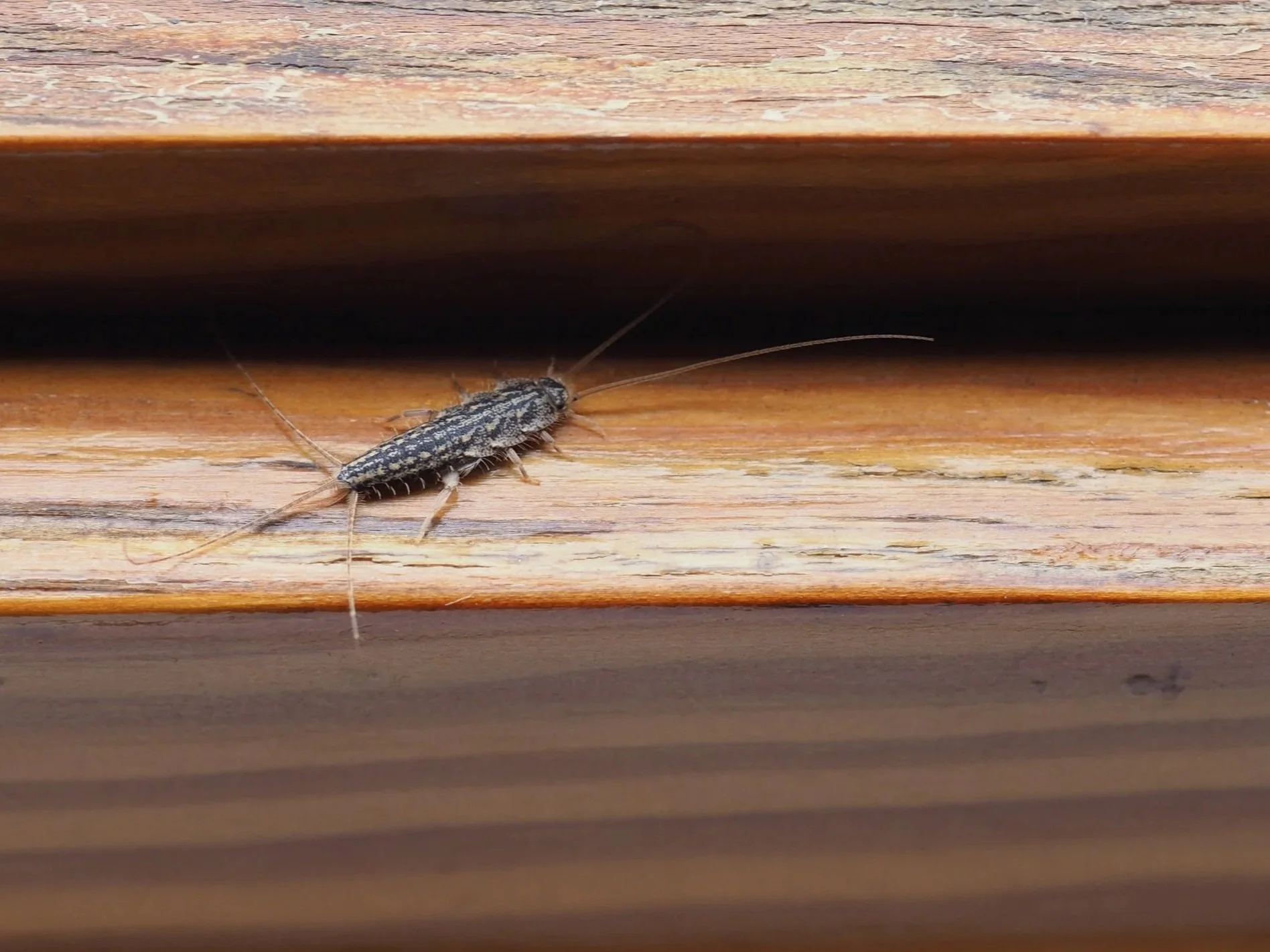
Did You Know?
Silverfish are living fossils! They have existed for over 400 million years—predating the dinosaurs. Their longevity is due to their ability to survive for up to a year without food, as long as they have access to moisture. This is why DIY treatments often fail; they can simply "wait you out" in the cracks of your baseboards.
Commercial pest control in the Hudson Valley during winter focuses on preventing Larder Beetles and Silverfish from damaging property. Larder Beetles often signal a secondary infestation, such as dead rodents in wall voids, while Silverfish indicate high humidity levels. Professional remediation ensures inventory safety and structural integrity for businesses in New City and Poughkeepsie.
From the historic storefronts in Nyack to the sprawling industrial parks in Newburgh, commercial structures provide the three things these pests need: stability, moisture, and food.
1. The Moisture Trap
Silverfish require humidity levels above 75%. In the winter, businesses often overlook the humidity buildup in basements or near industrial boilers. If your facility is located near the humid corridors of Route 32, your storage rooms could be a breeding ground.
2. High-Protein Commodities
Larder Beetles are a significant risk for the Hudson Valley’s robust restaurant and food processing sector. A single forgotten bag of grain or a spill behind a pallet in a Wappingers Falls warehouse can sustain a colony through the entire spring.
The Hudson Valley Industry Perspective: Why Location Matters
The diverse economy of the Hudson Valley presents unique challenges for pest control.
Historic Buildings & Offices: In older structures common in Nyack or Goshen, Silverfish find endless harborage in wall voids and under floorboards. These buildings often have inconsistent moisture levels, creating the high-humidity pockets Silverfish crave.
Food Processing & Distribution: Facilities near major logistics routes like I-287 or the New York State Thruway are subject to strict federal regulations, including the Food Safety Modernization Act (FSMA). A Larder Beetle infestation in a distribution hub can trigger a "non-compliance" status, leading to costly shutdowns and loss of business.
Hospitals & Clean Facilities: In medical or laboratory settings in Wappingers Falls, the presence of any insect is a sanitation breach. Silverfish are often drawn to the sterile, climate-controlled environments that accidentally harbor moisture behind industrial equipment.
Protecting Your Bottom Line with Integrated Pest Management
At Hollenbeck Pest Control, we don't just "spray and pray." We utilize Integrated Pest Management. For a commercial facility near I-87 or Route 32, “Integrated” means we analyze the biology of the pest and the specific vulnerabilities of your building. This includes sealing entry points, managing moisture levels, and using targeted treatments that minimize disruption to your employees or customers.
Targets for Commercial Property Managers:
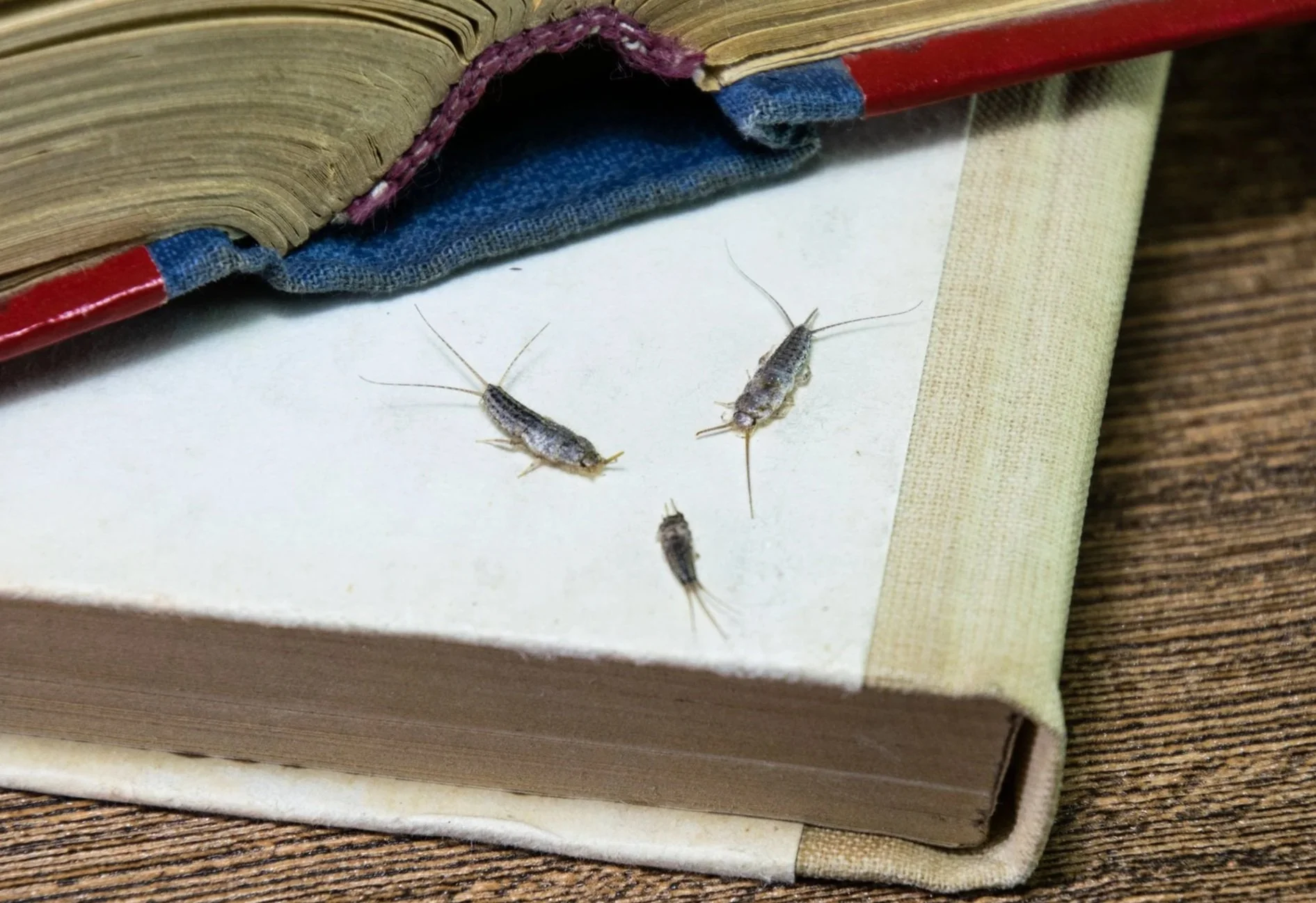
Silverfish: The Document Destroyer
For legal firms and administrative offices near Route 59 or I-287, Silverfish are more than a nuisance. These prehistoric-looking insects feed on polysaccharides found in book bindings, wallpaper paste, and cardboard.
The Risk: In commercial settings, they can cause irreparable damage to archived files and sensitive paperwork.
The Sign: Look for small, irregular holes in paper or yellowish stains on surfaces in dark, damp areas like basements in Spring Valley or Airmont.
Larder Beetles: The Facility Contaminant
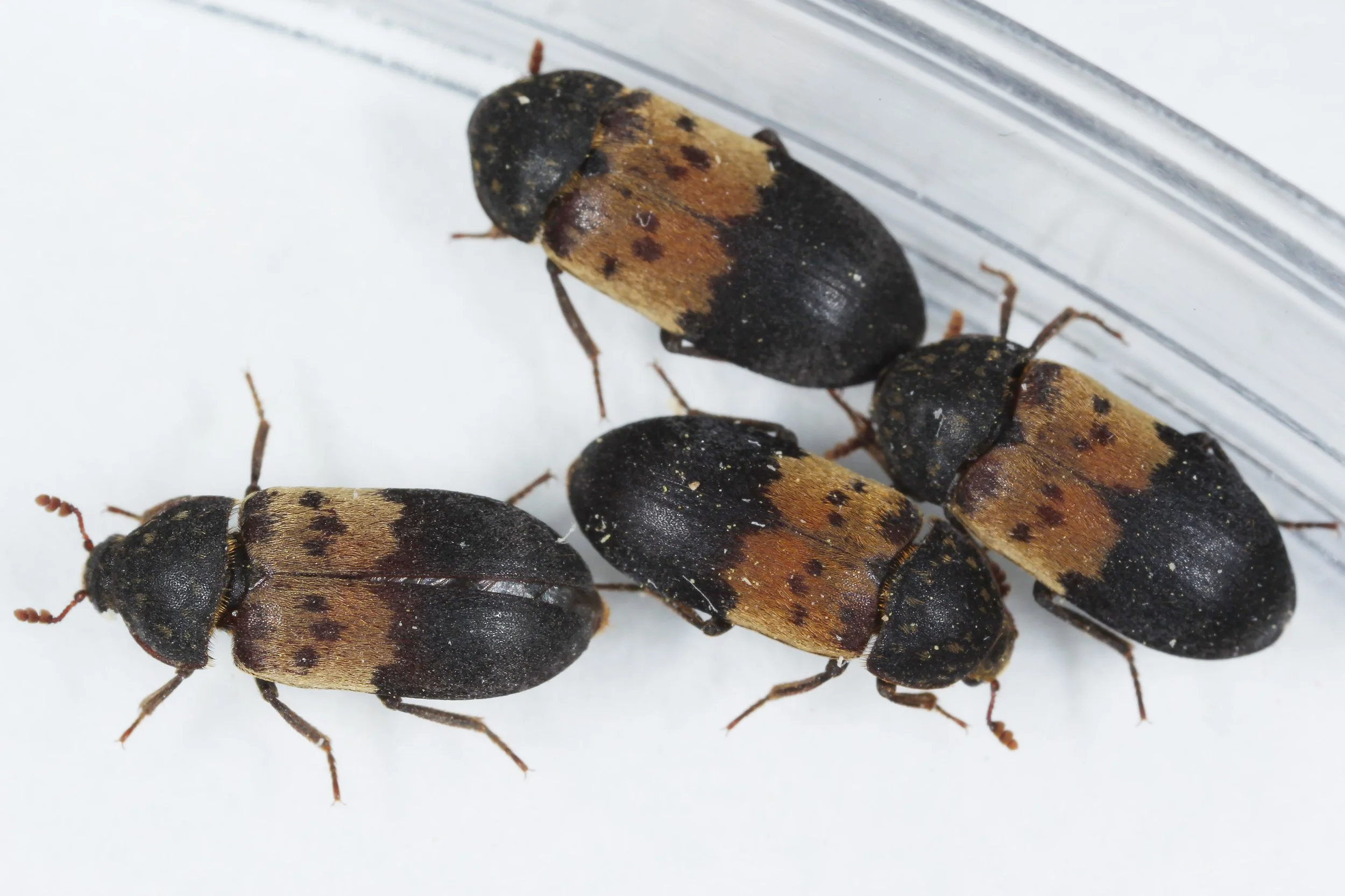
In the hospitality and multi-unit housing sectors of Suffern and Haverstraw, the Larder Beetle is a significant concern. They are attracted to high-protein sources, including stored food products and even the carcasses of other insects or rodents trapped within wall voids.
The Risk: Their presence often suggests a secondary issue (like a past rodent problem) and can lead to immediate health inspection failures for commercial kitchens.
The Sign: "Cigarette Burn" Bore Holes. Look for perfectly round, 1/8-inch holes drilled into drywall, wood, or insulation; these are created by Larder Beetle larvae seeking a place to pupate and are the primary indicator of a structural infestation.
Larder Beetles earned their name because they were historically found in "larders" or pantries. Today, they are often a "secondary" pest. If your commercial building in Spring Valley or Suffern recently had a rodent problem, Larder Beetles may move into the wall voids to feed on the remains of deceased rodents, creating a new infestation long after the mice are gone.
Strategic Commercial Protection
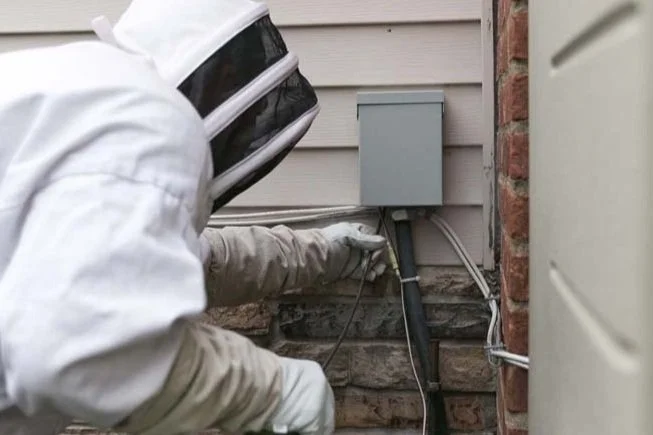
Hollenbeck Pest Control provides a sophisticated approach to managing these interior threats, specifically tailored for the high-traffic demands of Rockland County businesses.
Precision Monitoring: We utilize professional-grade pheromone traps and glue boards to identify "hot zones" before an infestation spreads through common walls or ventilation shafts.
Habitat Mitigation: Our technicians don't just spray; we advise property managers on moisture control and crack-and-crevice sealing along Route 304 and major commercial corridors.
Non-Disruptive Service: We understand that business continuity is paramount. Our monthly service plans are executed with professional discretion, ensuring your tenants and clients remain unaware of our intervention.
Integrated Pest Management as a Business Standard
For a modern business, traditional chemical-only pest control is often insufficient and sometimes inappropriate. Hollenbeck Pest Control utilizes Integrated Pest Management, a science-based strategy that emphasizes:
Detailed Inspection: We don't just treat the sightings; we find the source. This involves monitoring traps in strategic locations (like behind commercial refrigerators or in server rooms) to track pest movement.
Environmental Modification: We work with your facility manager to identify and fix the "conducive conditions." This might mean suggesting a commercial-grade dehumidifier for a basement in Chester or sealing a gap under a loading dock door in Newburgh.
Targeted Remediation: When treatment is necessary, we use the least-toxic, most effective methods. For Silverfish, this may involve inorganic dusts in wall voids that remain effective for years. For Larder Beetles, it involves the surgical removal of infested materials and localized heat or cold treatments.
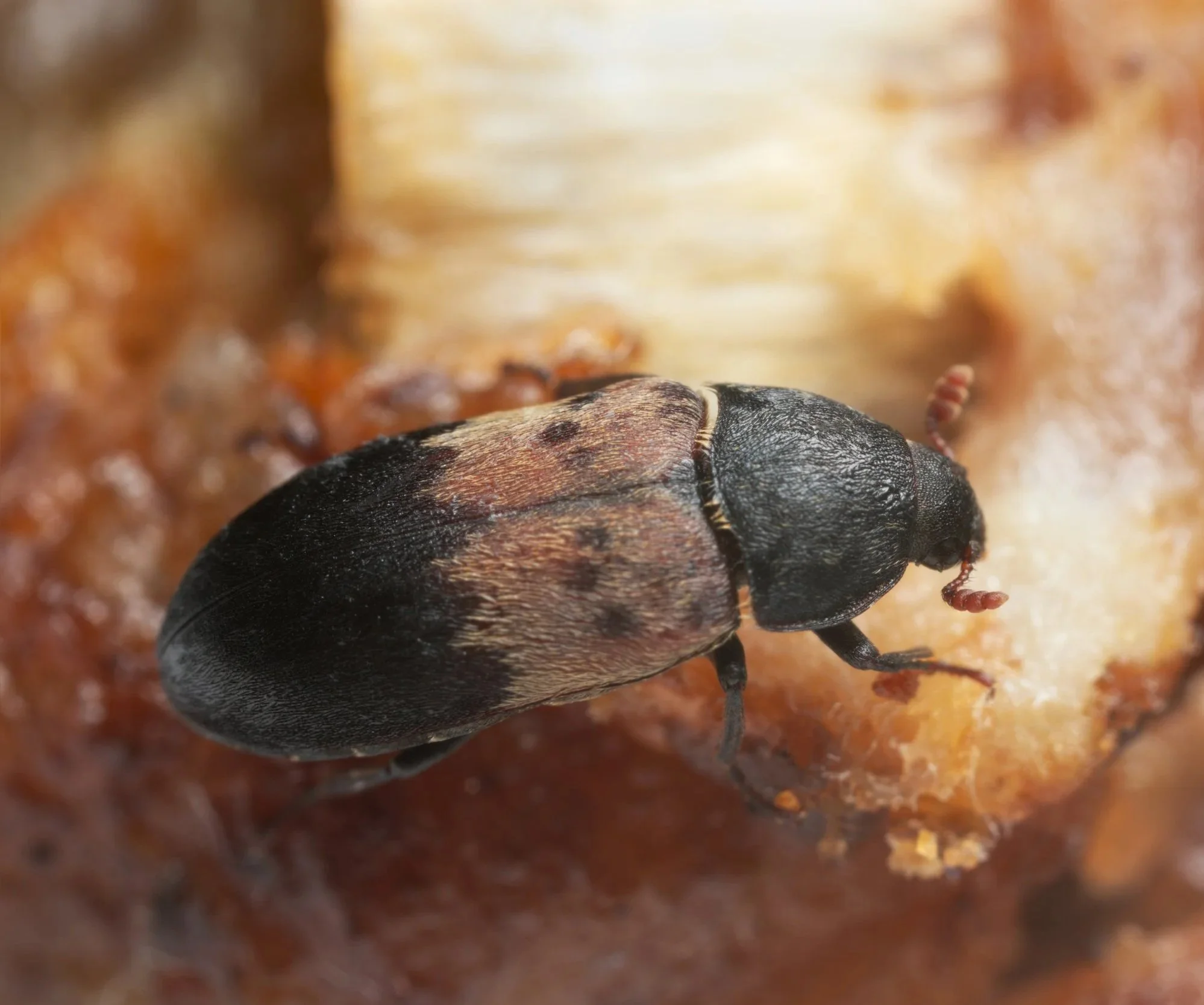
Pest of the Month
The Larder Beetle (Dermestes lardarius)
The Larder Beetle is a specialized scavenger. About 1/3 of an inch long, dark brown with a distinct pale yellow band across its back, this beetle thrives on high-protein sources. In the Hudson Valley, they are notorious for infesting dry pet food, cured meats, and even taxidermy. In January, Larder Beetles are often found in attics or crawlspaces feeding on dead insects that sought shelter in the fall. If left unchecked, their larvae can actually bore into wood or insulation to pupate, causing structural "pitting" over time.
Staying Ahead of the Winter Surge
As we move through the rest of the winter, the pressure on your facility's "envelope" will only increase. Pests are remarkably adept at finding the smallest breach—a crack in the foundation near Route 9A or an unsealed pipe entry in Putnam County.
Maintaining a pest-free environment is an ongoing partnership between your staff and our technicians. By focusing on sanitation, moisture control, and regular professional monitoring, you can ensure that the only things growing in your facility this year are your profits and your reputation.
Protecting Your Heirlooms and Pantry
For homeowners in New Windsor and Kingston, the damage caused by these pests is often personal. Silverfish don't just eat crumbs; they consume cellulose. This means your precious family photo albums, vintage wallpaper, and silk garments are all on the menu.
To keep your home safe this winter:
Dehumidify: Keep basement humidity below 50% to make the environment inhospitable for Silverfish.
Seal Food: Move flour, cereal, and dry pet food into airtight glass or hard plastic containers.
Clear the Voids: Professional vacuuming of attic spaces can remove the dead insects that attract Larder Beetles.
At Hollenbeck Pest Control, we specialize in deep-void treatments that reach where these pests hide. Don't let your "winter guests" ruin your spring—call us today for a comprehensive interior audit.
Silverfish & Larder Beetles FAQ: Frequently Asked Questions
Silverfish & Larder Beetles FAQ: Identification & Winter Risks
Why are these pests active in the winter?
They seek the stable, warm microclimates created by commercial heating systems when outdoor temperatures drop in the Hudson Valley.Inside heated facilities in Newburgh or Poughkeepsie, these pests find the moisture and food they need to thrive. Silverfish gravitate toward humid storage areas, while Larder Beetles seek out protein food sources in kitchens or storage.
What are the signs of a Silverfish infestation?
Signs include seeing the insects themselves, finding yellowish stains on paper, or noticing small, irregular holes in documents.Because they are nocturnal, you may not see them during business hours in your Middletown office, making professional monitoring traps an essential part of your defense.
Do Larder Beetles feed on dead rodents?
Yes, they are attracted to animal proteins, including the remains of rodents in wall voids.This is why integrated service is vital; if Hollenbeck clears a rodent issue in Spring Valley, we also monitor for secondary pests like beetles to ensure a complete solution.
Silverfish & Larder Beetles FAQ: Commercial Impact & Logistics
Can Silverfish damage business records?
Yes, Silverfish feed on starches and adhesives, which can destroy legal documents and archives.In professional settings like those in New City, Silverfish often infest filing rooms, chewing through paper and compromising physical assets that may be irreplaceable for your firm.
Are Larder Beetles a health risk for restaurants?
Larder Beetles contaminate food supplies with waste and shed skins, posing a risk to food safety and reputation.Beyond contamination, their larvae can bore into structural materials, causing hidden damage in Hudson Valley commercial kitchens that can lead to health code violations and costly inventory loss.
How do Larder Beetles enter a commercial warehouse?
They often hitchhike on shipments or enter through gaps in loading docks and utility lines.Facilities along the I-87 corridor are particularly vulnerable to "hitchhiking" pests brought in via global or regional supply chains, making receiving-area inspections critical for your facility.
Silverfish & Larder Beetles FAQ: Professional Solutions & Compliance
What is the benefit of Integrated Pest Management for businesses?
Integrated Pest Management focuses on long-term prevention by addressing root causes like entry points and moisture rather than just symptoms.This approach reduces chemical reliance and ensures your Hudson Valley facility meets strict safety, environmental, and commercial compliance standards expected in 2026.
Can moisture control stop Silverfish?
Yes, reducing humidity is a key component of a professional strategy to eliminate Silverfish and other dampness-loving pests.By using commercial dehumidifiers in storage basements in Kingston, businesses can make the environment naturally inhospitable for these pests without constant chemical application.
How often should I have a commercial inspection?
Most commercial properties benefit from monthly or quarterly inspections to catch infestations before they escalate.Consistent monitoring ensures that small issues in a New Windsor facility don't become costly inventory losses or brand-damaging events that could affect your business reputation.
Does Hollenbeck provide documentation for health audits?
Yes, we provide digital logs and professional reports required for health department and industry audits.This ensures your business in Rockland or Orange County remains transparent and compliant with all local, state, and federal regulations.